Wednesday, June 23, 2010

New Season Oil

Olio Nuovo translates as 'New Oil', pressed on the day of harvest and bottled immediately, taking advantage of the unique flavours of freshly pressed oil. Our 2010 Olio Nuovo is available now.Only 200 bottles made, hand bottled, hand labelled and unfiltered. For more information or to order please check our website.

For the perfect way to enjoy our Olio Nuovo check out the recommendations below from Seresin Cook, Marcia Chang-Hong.

"I think that the very nature of olio nuovo dictates what it can be used for. The freshness and fruity purity of the oil is akin to fresh milk from a cow or sucking honey from the honeycomb in the hive. I'd resist cooking with it. Heating it causes the polyphenols to lost their properties and changes the taste.

The best way to use it is to drizzle it on fresh crusty bread or make bruschetta or pour it over pasta, soups and salads.


Given the lack of fresh veggies available and the cold winter weather I think Lentil Soup is an appropriate recipe for the times. Drizzled with generous pouring of olio nuovo to give a hint of something extravagant and something fresh to perk up your taste buds."

Marcia.

Lentil Soup

1½ cups small brown lentils
6 tbsp olio nuovo
1 onion finely chopped
1 carrot finely chopped
1 celery stalk finely chopped
1 leek finely chopped
3 ounce piece of pancetta or bacon, diced
2 cloves garlic minced
a sprig rosemary
small bunch of sage
2 bay leaves
6 cups vegetable or chicken stock
salt and pepper

Soak lentils for half and hour and drain
Gently warm half of the olio nuovo with the vegetables and pancetta. Stir gently over a soft heat for 5 minutes until the vegetables are soft but not coloured. Add the garlic and sauté a few more minutes. Add the lentils then tie the herbs together and add. Cook for 5 minutes, stirring gently.

Add the stock, bring to a boil, turn the heat down and simmer for 45 minutes until the lentils are soft.

At the end of the cooking time remove ½ cup of the lentils and reserve. Remove the herbs and puree the soup in a food processor. Return to the heat and stir in the reserved whole lentils. If the soup is too thick, add some stock or water to loosen.

Season the soup with salt and pepper. Serve in bowls with lots of fresh olio nuovo and chopped parsley and fresh black pepper.

Friday, May 28, 2010

Olive Harvest 2010

Yesterday brought not only the first snow to the hills around the winery, but also the first day of our Olive Harvest for 2010. First to be harvested were some Leccino and Pendolino, followed by some Frantoio this morning.

Here Colin is harvesting the olives from the trees along the boundary of our Home Vineyard. We harvest the olives using rakes which gently shake the branches of the tree. The ripe, healthy olives fall from the tree onto the nets we lay down. Any olives that have been damaged by frosts or birds cling to the tree - so only the best olives are collected. That said, this year we have been very lucky with a warm May, and the olives are free of frost damage.

Then we collect the olives which have fallen onto the nets below the trees, and take them to be pressed at Marlborough's community olive press.

The olives are first washed, and passed through a tray with large holes to separate them from any leaves that are inevitably collected.
Then the olives are smashed into a paste using a hammer mill - stones and all. This paste then passes through the malaxer shown above, which mixes and agitates the olive paste.

The olive paste then passes through a centrifuge, a machine which separates out the oil by spinning it at high speed, leaving you with beautiful green olive oil! The remaining paste of flesh and stones can then be brought back to the vineyard for composting.

This olive oil will form part of our Olio Nuovo, literally 'New Oil', the bright, fresh, green olive oil released soon after harvesting and pressing.

Wednesday, May 26, 2010

Seresin Landfall Residency 2010

Alongside Otago University Press, we are delighted to announce New Zealand writer and curator Wystan Curnow as the winner of the second Seresin Landfall Residency.
Wystan Curnow is a writer, curator, editor and educator who has worked in the arts for 40 years, publishing 30 books and numerous articles, reviews and poems.
He will spend the six-week residency in Tuscany working on a book on prominent New Zealand artist Colin McCahon. Wystan says 'it is taking a bit of time to sink in - you don't count on such outcomes.'
Michael Seresin says the quality of the 2010 applicants made a final decision very difficult, however he felt it was important to support Wystan Curnow's latest work.
'The project that Mr Curnow is working on has an enormous amount of merit, not least because Colin McCahon is such a pivotal figure in New Zealand art. I believe we should contribute anything we can to get this work completed.'
Mr Curnow says 'McCahon was a friend of my family, my mother especially. As a secondary school art student I was selected for an advanced class at the Auckland City Art Gallery, taught partly by McCahon. As a university student I hung out with him at the Gallery and in the pub after work.'
Curnow adds 'my writing and curating of McCahon work is notable for shifting attention to his later language-based works at a time when his landscape work was preferred by most critics, and for introducing McCahon to an international audience first in Australia and later in Europe.'

For more information about Mr Curnow and the 2010 Seresin Landfall Residency, please visit our website.

Monday, May 17, 2010

Tasting by the Moon

The moon and its rhythms has long been an important part of Biodynamics. It has such a huge impact on the tides - why not soils, plants, people, and wine too? Biodynamics aims to work in harmony with these rhythms as much as possible - spraying the biodynamic preparations on the land and plants when they are best absorbed, pruning when vines are at their most resilient - the list goes on.

UK journalist Jonathon Ray, from the Telegraph, has been asking whether the moon affects how wine tastes. Ray discusses how the major UK supermarkets are holding their press tastings according to the Biodynamic calendar, and finding the results convincing. Click here to see the full article.

Wednesday, May 5, 2010

Harvest 2010 - Raupo Creek Pinot Noir

After three weeks of post-ferment maceration, Clive decided it was time to press our Pinot Noir from the top of the hill on our Raupo Creek vineyard. This is the Pinot we hope will become our 2010 Sun and Moon.


Through harvest, Clive tastes each Pinot Noir every day until he thinks the wine is nearly ready to be pressed and put into barrels. Then the samples that Lindsey has kept each day are put into a line-up, and the winemaking team will taste the samples. Here some of the line-up is shown - from the earlier samples on the left, through to todays sample on the right. Once Clive thinks the wine has has got the best that post-fermentation maceration has to offer, it is time to press the wines to barrel.


The first step is to drain the free-run wine, which we hold in a small tank until the skins have been pressed. Next is the fun part - digging out the grape skins from the tank. This seems to be the job that everyone in the winery wants to do!


Today Kevin and Lars had the job of digging. Kevin moved to New Zealand from Canada several years ago, and each year spends harvest in the winery, and the rest of the year works in our vineyards. Here the two of them are in the tank digging the skins onto the chute leading into the press.

The pressed juice goes into the tank with the free-run juice and mixed before being transferred into barrels. The grape skins are then taken out to our compost piles to form part of our next compost heap.

Wednesday, April 28, 2010

Harvest 2010 - Handprints


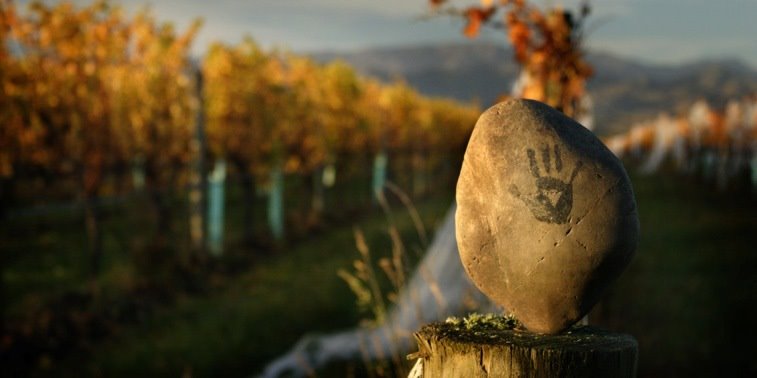
Every year our vintage team have the opportunity to leave a permanent reminder of their time with us - through their influence on our wines and on the walls of our winery.


These concrete walls are adorned with the marks of past and present harvest staff.


Their handprints, alongside their name and home country, a fitting memento of their hard work.


Today our 2010 harvest staff had their turn.


Tuesday, April 27, 2010

Harvest 2010 - Paella

As well as being Seresin's Assistant Winemaker, Carlos Orgiles is also our resident paella expert, a dish he is frequently asked to make! Carlos is from Ibi, which is 45 minutes inland from Alicante, in Spain. Rabbit paella is a traditional dish there - often cooked on Sundays with the whole family.

He has kindy offered to teach us the basics of paella making with this delicious seafood paella that he and sous chef Marcia made for lunch for the winery team today.
The first thing to do, is to make or get your hands on a good, flavoursome fish stock. A good stock is important to enhance the flavours of the paella. Marcia cooked about 1kg of mussels in our already finished fish stock today, which gave the stock more flavour and got the mussels cooked and ready for the paella. You'll need about 2 cups of stock for every cup of rice.

Then, in a large paella pan, fry onion and celery until soft over a medium heat. Add in any vegetables you want to use - we used broccoli and beans - and cook for a few minutes until they just start to soften. Then Carlos added prawns, monkfish and crayfish and fried these for a few minutes. Carlos says 'paella is like pasta - you can use any meats and vegetables that you want. My favourite is artichoke paella, with cauliflower, brocolli, beans and peas.'

Then after a few minutes, add Arborio rice. Carlos measures the rice by cupping one of his hands, and fills it with grains of rice. Use two of these handfuls per person. Pour the measured rice across the fish and vegetables - spreading it evenly across the pan.

Then add almost all your stock - poured across the paella. Carlos suggests keeping aside a little bit of stock, in case it all evaporates before the rice is cooked.

A crucial part of paella making, Carlos says, is 'don't stir it! With a spoon, even out the little mountains of rice. If some parts of the pan have lots of rice and not much stock, take a spoonful of that rice and put it in a part of the pan with lots of stock and not much rice.

Sprinkle saffron, black pepper, cloves and salt over the paella. Also add a tiny bit of paprika - 'only a tiny bit. The paprika is only for flavour - not colour. The saffron is for the colour.'
Let this simmer until the rice is cooked. If the rice is still crunchy and the stock has evaporated, add the reserved stock. If the rice is cooked and the paella is still sloppy - turn up the heat to absorb the liquid quickly. Here you can add any ingredients which are already cooked, like the mussels we had pre-cooked in the stock.

Once the rice is cooked, turn off the heat and make a 'lid' for the pan with newspaper, folding the edges down. Carlos likes to use the sports pages for this - so he can read them while the paella rests for 5 to 10 minutes.

Carlos and Marcia served the paella with slices of lemon and homemade allioli (Spanish aioli), and a glass of Rudd Vineyard 2008 Sauvignon Blanc that Lindsey brought from the winery she works at in Napa, USA.

Thursday, April 22, 2010

Harvest 2010 - More Snapshots

A few captured moments from our 2010 vintage......


Wednesday, April 21, 2010

Harvest 2010 - Perfect Pinot Gris

This afternoon our vineyard staff hand-picked the Pinot Gris grown in our Home Vineyard.


Our viticulturalist, Colin Ross, is thrilled with the quality and flavour of the fruit.

"Pinot Gris isn’t a variety known for having good varietal definition; it is usually very fruit-forward. It's a real winemakers wine, often it is the winemaking that makes this variety interesting. We have grown this Pinot Gris like we do our Pinot Noir - with very low crops. As a result this fruit is has got unusually intense concentration and texture. I can't wait to see the wines that come from this!"

Tuesday, April 20, 2010

Harvest 2010 - Vintage Work Experience

Harvest is the perfect time to learn more about the art of making good wine. Seresin staff, employed in marketing, admin and the cellar door, enjoy the opportunity to get their hand's dirty and spend a day or two as part of the vintage team.

Today our Cellar Door Manager, Carolina, spent the day working in the winery, pressing grapes, racking wine, cleaning tanks, warming ferments, sampling and checking the progress of our fermentations.


Carol says she can’t believe how much she has learnt. “Working in the winery during vintage has given me the chance to experience another side of Seresin. I can give visitors to our Cellar Door a better experience because I now know more about the whole winemaking process.”

Monday, April 19, 2010

Harvest 2010 - Raupo Creek Pinot Noir

Our first Pinot Noir from 2010 has finished fermentation.

Seresin Assistant Winemaker Carlos Orgiles is looking at our Pinot Noir which came from the top of the hill on our Raupo Creek vineyard.

These were the first grapes we picked, and last week they were the first to finish their natural fermentation. This means that all the sugars have fermented and converted to alcohol.

After fermentation, all our Pinot Noirs stay on their skins for two to three weeks of post-ferment maceration before being pressed to barrel. This allows greater extraction from the skins and gives us darker coloured, more complete, structured wines. It also helps move the fruit profile from being fresh, pure and simple, to a wine with darker, more savoury characters.

Carlos says 'wine is all about balance. The balance of fruit, tannin, colour and alcohol. This extended post-ferment maceration helps to give that balance.'

Clive adds 'this fruit was grown with the view to becoming our Sun & Moon Pinot Noir, and although it's early days, it looks spectacular and likely to make the grade. Only time will tell...'

Thursday, April 15, 2010

Harvest 2010 - Snapshots

A slideshow of some of the photos we've taken over the last couple of weeks of Harvest...

Enjoy!

Harvest 2010 - Pied de Cuve

We prefer to ferment our wines using wild yeast. We believe that by allowing our wine to spontaneously ferment with the aid of the yeast specific to our vineyards, we will produce wines that are truly reflective of our land.

This vintage we are experimenting with using a ‘pied de cuve’ - a yeast culture isolated from one of our vineyards, and used to help us with the last few days of fermentation.

In some years as a wine starts to get drier and the alcohol increases the yeast population reduces and become more fragile. Adding a fresh population of yeast at this stage helps to re-invigorate and finish the fermentation. This is where the Pied de Cuve comes in, supplying enough yeast to help finish off approximately 3 or 4 ferments.


Moir and Alexis are pictured here checking the progress of our Pinot Noir wild-yeast culture.


The cultures are grown from Seresin grape juice, which is kept warm and bubbled with oxygen. Once the culture develops it is fed every day with freshly pressed juice, high in sugar.


We aim to add the Pied de Cuve to the wine when the fermentation is approximately 90% finished. When the sugar and alcohol levels of our yeast mixture are similar to that of the wine, we simply add about 20 litres of our culture and wait!

Tuesday, April 13, 2010

Harvest 2010 - Picking

Our full time vineyard staff are assisted throughout the year by a group called Unity in Diversity. Unity in Diversity is managed by Tisa Siale and the staff are made up of his extended family group. Approximately 20 of Tisa's family members work throughout the year in our vineyards, doing much of our hand-work; pruning, leaf plucking, shoot thinning, fruit thinning, weeding, and harvesting.


Over harvest-time, Tisa has a few extra hands on deck to help with our picking. There is a team of between 30 and 65 people picking each day.


Yesterday, Tisa and his crew harvested a lot of the fruit from the vines surrounding the winery, on our Home vineyard. First to be picked was Semillon from right outside the Cellar Door...


The Semillon grapes will be naturally fermented in seasoned French oak, and will make up a small portion of our Seresin Sauvignon Blanc.

After harvesting the Semillon, the pickers moved down to the terrace below the winery to pick some of the rows of Pinot Noir on the Leah block.


Earlier in the year, Tisa and his family work hard at getting the vines ready for harvest. They crop thin, which enables us to acheive our optimum yields. As well, they leaf pluck and shoot thin, which promotes healthy growth and aids ripening. As you can see from the photo, it also makes the fruit much easier for picking hands to reach!
Colin, Seresin's estate manager, says they pick as fast as a machine harvester!

Monday, April 12, 2010

Seresin Dinner at The Modern Pantry

For those of you in London, we are excited to announce an upcoming Seresin Dinner at Anna Hansen's restaurant The Modern Pantry.

We first met Anna in 1999 when she was Peter Gordon's sous chef at our inaugural Waterfall Bay Dinners, and she returned in 2005 as the Waterfall Bay guest chef. She then went on to open The Modern Pantry in 2008.


Anna has developed a mouth-watering menu to match with Seresin wines for the upcoming dinner:

Morcilla scotched quail eggs, tomato relish, sweetcorn, tumeric, feta & green chilli fritters, with tamarind & palm sugar dipping sauce
2009 Memento Riesling

Grilled chicory, aubergine, pandan, date & pine nut salad with Seresin orange oil
2006 Reserve Chardonnay

Slow cooked octopus, curry leaves, tomato & ginger, caramelised coconut & vanilla cream
2008 Sauvignon Blanc

Seared venison loin, wilted wild garlic, chocolate jus
2008 Leah Pinot Noir and 2007 Rachel Pinot Noir

Seresin manuka honey & yoghurt bavarois, poached rhubarb, and fenugreek shortbread
2005 Late Harvest Riesling

This dinner will be held on 19 May, and tickets are £70. If you would like to book tickets for this dinner, please contact Dougal at The Modern Pantry on 020 7553 9210 or enquiries@themodernpantry.co.uk.

Harvest 2010 - Plunging


As our pinot noir fermentations progress our winery team have begun their twice daily job of hand-plunging. During fermentation the grape-skins naturally rise to the surface forming a dense cap. It is important to plunge to release the heat that builds up during fermentation and to wet the cap and mix the skins through the ferment. This ensures that flavour and colour from the skins is evenly extracted.


This pinot noir from the Leah Block in the Home Vineyard has been through a 5-day cold soak before the tank was warmed and the juice allowed to naturally begin fermentation. This ferment only began yesterday but you can already see the bubbles of CO2 formed by the fermentation.


Friday, April 9, 2010

Auckland's 'Old World vs New World' Tasting

This Monday, a friend of ours, the Auckland Food Blog is hosting their very first tasting...

This initimate event is being held at Ponsonby restaurant SIDART, where sommelier Marie Colosimo has put together a line-up of her favourite Old and New world wines for the occasion. Auckland Food Blogger Jesse Mulligan says hearing Marie talk about wine is like 'hearing Al Gore talk about climate change'. And SIDART chef Sid Sahrawat will be creating some canapes to accompany the tasting. You can't get much better than that!

We are really pleased that one of our wines has been chosen for this very cool tasting (even if we can't tell you which one...), and can't wait for Monday!

Harvest 2010 - Raupo Creek Pinot Noir

Having spent almost two weeks in the winery now since picking, it was time to check the progress of our Raupo Creek pinot noir...


Alexis Goodman, Seresin assistant winemaker, is shown here making one of her regular checks of our Pinot Noir.

Each pinot is checked every day - Lindsey will take a sample and check how the temperature and sugar levels are changing, and the winemakers will smell and taste the juice or wine.

As well as this, each pinot noir will be plunged - this gently mixes the fruit and extracts the colour, flavour, and tannin from the grape skins.

This tank of Raupo Creek pinot noir has finished its pre-fermentation cold soak, and has naturally started to ferment.

Thursday, April 8, 2010

Harvest 2010 - Harvest Helpers

There are always lots of willing helpers around vintage time, keen to lend a hand and experience some of the magic of the harvest.

One of the regulars is Gabby Tait. Vintage usually coincides with the school holidays and Gabby has been a part of the Seresin harvest team for six years.


Gabby is pictured here delivering grapes to the winery, with her father Scott, the Seresin Property Manager.

Gabby says she enjoys tasting the different grapes and getting to drink freshly pressed grape juice. She says "my favourite part about harvest is meeting all the new people."


Wednesday, April 7, 2010

Harvest 2010 - Vintage Food

We think our vintage staff are the best fed in Marlborough.

Every year Marcia Chang-Hong prepares fresh hot meals for lunch and dinner, morning and afternoon tea for our hungry staff. For three to four weeks Marcia cooks seven days, never repeating a dish - unless requested.


Marcia is pictured here with Winemaker, Clive Dougall, delivering today's lunch. On the menu this Wednesday?

For morning tea, Zucchini and Chocolate Loaf. Lunch was Silverbeet and Feta Filo, with a warm Potato Salad. Dinner is Shin of Beef with Potato and Sorrel Gratin. Veges are all home grown, either in Marcia's backyard or the Vineyard gardens.

Tuesday, April 6, 2010

Harvest 2010 - Cleaning

One of the most important jobs in any winery over harvest, and one that keeps us very busy, is cleaning! Everything must be cleaned before and after coming in contact with any fruit, juice or wine.

Today we hand-picked some of the Riesling from our Home vineyard, and it was pressed this afternoon. After pressing the best juice from the fruit, the skins are emptied out of the press, and the press is then cleaned. To do this, someone has to climb into the press to hose it all out. Today it was Lars, our Swedish Cellarhand, who donned his wet weather gear and climbed in.


This photo shows the two main parts of the inside of the press. The tan coloured part on the left is the membrane - which inflates and squashes the grapes against the right hand side. The metal on the right hand side is covered in small holes which act like a sieve, and allows just the juice to drain out.

Here, Lars is about to clean the press, and get it ready for the next fruit to arrive.

Thursday, April 1, 2010

Harvest 2010 - Raupo Creek Pinot Noir

After a week of warm days we began picking our still wines on Monday. First in was our reserve pinot noir block, picked from the top of the hill in our Raupo Creek Vineyard, and cropped at Grand Cru Burgundy levels.


Each bunch was hand-picked and berries hand selected. Pictured here are some of our vineyard staff doing a berry selection.

Our Viticulturalist, Colin Ross, is enjoying the opportunity to taste grapes from our different Pinot Noir blocks. He says "the taste profile across contours and rows is a truly fascinating thing. The textural expression is so amazingly evident in the Pinot and every dip, hollow and hillock tells a story."

Tuesday, March 30, 2010

Harvest 2010 - Vintage Staff

Another member of the winery harvest team, is a returnee to the Seresin team from 2009.

Introducing Axel May...

Axel returns after spending the year at home in Rheinhessen, in Germany, where he has been working in his family winery - Weingut Steinmūhle.

Here Axel is loading some of the hand-picked MOMO Sauvignon Blanc into our press - giving it a bit of gentle prodding with the rake when needed!

Axel says it is great to be working with such a fabulous team this year - both in the winery and the vineyard. He says he it is exciting to come back and see how the wines have developed - that 2009 was a great vintage, and he's enjoying getting to taste the wines one year on.

Harvest 2010 - Vintage Staff

Another of the three harvest additions to our winery team is Jacopo Dallicani.


Jacopo comes from Soave in Verona, North East Italy. He studied winemaking at Conegliano Italy - the oldest Italian university teaching winemaking. Before joining us, Jacopo was travelling the world working with wine, having done several vintages in Italy, Australia, France, and New Zealand. He arrived at Seresin in January, and has been working in the vineyard before moving into the cellar for harvest.
He's shown here taking the first of our MOMO fruit for 2010 - Sauvignon Blanc which has just been handpicked from our Home Vineyard.

Jacopo says he is excited to be working at Seresin, and really enjoying the opportunity to learn about and work with biodynamics.
And as well as being rather handy in the winery, Jacopo makes a mean lasagne... He's a very handy guy to have around!

Monday, March 29, 2010

The Winners of the Capital Awards

We had the pleasure of being involved in the 2010 Capital Awards, which celebrate the best of hospitality in our capital city. The winners were annouced last night at a ceremony in Wellington.

The Seresin Award for outstanding wine list went to Matterhorn. The man responsible for this list, Stephen Wong was selected as the best Wellington Sommelier.

The award for the outstanding restaurant went to Capitol and Logan Brown was recognised for the best kitchen team and their outstanding contribution to Wellington Hospitality.

The ceremony was followed by an after party at the Skyline Restaurant, guests enjoyed a variety of refreshments including the 2008 Seresin Sauvignon Blanc and celebrated into the wee hours of this morning.

For a full list of awards and winners visit the Capital Awards website.

Friday, March 26, 2010

Harvest 2010 - Vintage Staff

Every vintage we welcome several new faces to Seresin. Our vintage interns come to us from all over the world, bringing with them international experience and lots of enthusiasm.


This year three new staff will assist our Winemaker, Clive Dougall, Assistant Winemakers, Carlos Orgiles and Alexis Goodman and Cellarhand, Lars Gabrielsson over the busy months of harvest.

Introducing Lindsey Sesin....

Lindsey joins us from Rudd Winery in the Napa Valley, and will spend the next couple of months working in our laboratory and assisting in the cellar.

Lindsey says harvest at Seresin offers her the opportunity to be part of a small hands-on team and the chance to learn about biodynamic viticulture and winemaking.

2010 is Lindsey's fourth vintage and her second in New Zealand.

Harvest 2010 - Sampling

With our first grapes now in the winery it is even more important for us to closely monitor the progress of our vineyards as they ripen.


Every morning our Laboratory Intern, Lindsey Sesin, selects different grape samples from our vineyards. Each sample is juiced by hand and tested for sugar and acidity. Our winemaking and viticultural team then spend a lot of time tasting - both the juice and grapes, to make sure that the flavours are perfectly balanced before we pick.


Pictured here is a Pinot Noir Sample from our Raupo Creek Vineyard, which should be ready for harvesting in about seven days.


Wednesday, March 24, 2010

First Day of Harvest 2010

We gave the bees the day off and went for the grapes this time! A beautiful bright and sunny Marlborough morning marked our first day of harvest for this season. We lovingly picked a little bit of Pinot Meunier, Chardonnay and Pinot Noir to go into our sparkling wine base.

Monday, March 15, 2010

Honey Harvest

One of my most memorable days at Seresin was a couple of weeks ago, when I was fortunate to be involved in our first ‘Honey Harvest’. This was my first ‘official’ visit to life in the hive. Rob and I teamed up in our white bee suits and set about taking out the frames that were the fullest for processing. We took out 18 frames all together, brushing the bees from them with a paintbrush! The bees were very patient with us while we fumbled in our first ever harvest. One bee decided that he liked the look of Rob’s legs and got herself stuck down his sock – and a red mark resulted…


The processing of the honey was made able by a kind professional bee man down the road. He leant us a hand powered centrifuge to spin out the honey from the frames. The smoko room was on lock down as the bees could smell honey in the air and came to peacefully investigate the logistics of getting their liquid gold back.


For me, I was grateful to take time to remember and ponder on how wonderful and magical Mother Nature can be. Needless to say we are all about to enjoy 30L of Seresin artichoke influenced honey!


By Leisha Van der spek

Tuesday, March 9, 2010

It's Pinot we love


Pinot Noir is an incredibly beautiful grape, and a beautiful wine - we love it. It's called the heartbreak grape for good reason, it is a challenge to make and an even bigger challenge to grow but the quest to make the best possible Pinot Noir is something all of us at Seresin are driven by.

A new era commenced at Seresin in 2006 when Clive Dougall took over as winemaker and Colin Ross, our vineyard manager, joined us from a biodynamic vineyard in Western Australia. 2007 was their first vintage together at Seresin. From this vintage six different Pinot Noir were made. The 'Leah' named for Michael Seresin's daughter, is a blend of fruit from our three vineyards; 'Rachel', after Michael's mother, is a Pinot made from the best portions available from our Estate each year. From each of our three vineyards we have also produced a single vineyard wine; the 'Tatou', 'Home' and 'Raupo Creek' Pinot Noir illustrate the characteristics of our different sites and soils.


The unique conditions of the 2007 vintage allowed us for the first time to make a wine we have called 'Sun & Moon'. Cropped at a minimal one bunch per shoot or less, we believe this wine to be our best expression of Pinot Noir. It will only be made when this beautiful heartbreak grape allows us.

Internationally renowned UK winewriter Jamie Goode recently had the opportunity to taste the 'thrilling line-up' of all six of these wines, and has published his tasting notes and reviews on his blog. To see his reviews, check out his blog.